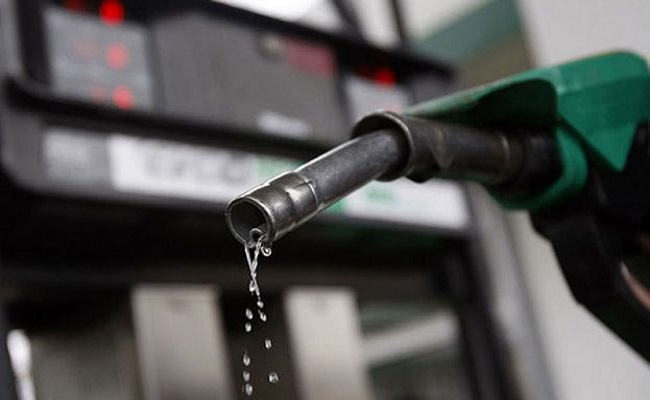
The Nigerian Midstream and Downstream Petroleum Regulatory Authority (NMDPRA) says the country has significantly reduced its importation of Premium Motor Spirit (PMS), fondly called petrol.
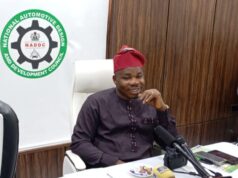
The Chief Executive Officer of NMDPRA, Farouk Ahmed, said this during the Meet-the-Press briefing series organised by the Presidential Communications Team (PTC) at the State House in Abuja on Tuesday, April 15, 2025.
Ahmed said Nigeria’s daily petrol importation dropped from 44.6 million litres in August 2024 to 14.7 million litres as of April 13.
Ahmed attributed the 29.9 million-litre drop in imports to increased contributions from local refineries.
The NMDPRA boss also disclosed that local production of petrol surged by 670 per cent during the same period.
He credited the rise to the gradual restart of the Port Harcourt Refining Company in November 2024, along with added output from modular refineries across the country.
“After contributing virtually nothing in August 2024, local plants delivered 26.2 million litres per day in early April, a jump from the 3.4 million litres recorded in September 2024, which was the first month with measurable output,” Ahmed stated.
Dangote refinery reduces petrol price to N865/litre
Ahmed, however, noted that despite the growth in domestic supply, total national supply exceeded the government’s 50 million litres per day consumption benchmark.
“Only twice within the eight-month period – 56 million litres in November 2024 and 52.3 million litres in February 2025,” the NMDPRA boss added.
Ahmed stated that the month of March 2025 saw a slight dip to 51.5 million litres per day, while the first half of April recorded an even lower average of 40.9 million litres per day.
Ahmed emphasised that the NMDPRA issues import licenses strictly in line with national supply requirements, underscoring the authority’s commitment to balancing imports with growing local production capacity.
He called for a collective national effort in protecting and maintaining Nigeria’s oil and gas infrastructure.
According to him, all stakeholders – including security agencies, political leaders, traditional rulers, youths, and oil companies must work together to secure national energy assets.
The NMDPRA boss also stressed that local government authorities and international oil companies (IOCs) such as the NNPC Limited, as well as indigenous companies, must take responsibility in ensuring that oil assets are protected and maintained.


- Morocco thrash Comoros in AFCON opener - December 22, 2025
- Presidency, Niger police speak on release of remaining 130 Catholic school students - December 22, 2025
- Elumelu’s Heirs Energies clinches $750m Afreximbank funding to boost growth - December 21, 2025